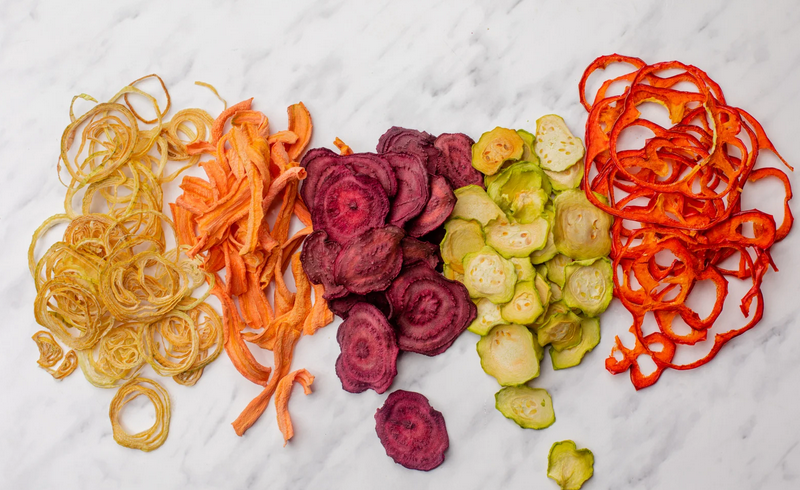
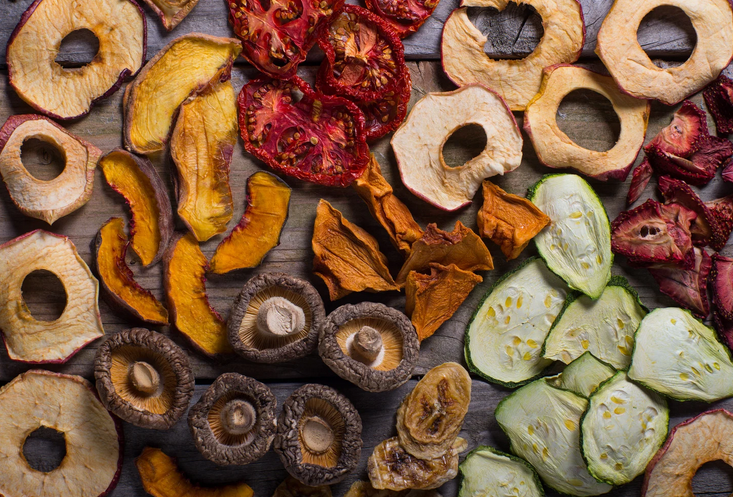
Dehydrated vegetables offer a range of benefits, similar to dehydrated fruits, combining nutrition, convenience, and versatility.
- Nutrient Preservation: Dehydration retains most vitamins, minerals, and fiber, though some heat-sensitive nutrients (like vitamin C) may reduce slightly. For example, dehydrated tomatoes still provide lycopene, an antioxidant supporting heart health.
- Extended Shelf Life: Removing water prevents microbial growth, allowing vegetables to last months or years when stored properly, ideal for pantry staples or emergency food supplies.
- Portability and Convenience: Lightweight and compact, they’re easy to carry for camping, travel, or quick meals without needing refrigeration.
- Versatile Culinary Uses: Dehydrated vegetables can enhance a variety of dishes:
- Soups and Stews: Rehydrate in broth for instant flavor (e.g., dried mushrooms or onions).
- Seasonings: Ground into powders for spices (e.g., dried garlic or tomato powder).
- Snacks: Eaten as crunchy chips (e.g., kale or beet chips).
- Baking: Added to breads or savory muffins for flavor and nutrition.
- Reduced Food Waste: Dehydrating surplus vegetables preserves seasonal produce, preventing spoilage and saving money.
- Space-Saving Storage: They take up less space than fresh or canned vegetables, making them ideal for small kitchens or bulk storage.
- Concentrated Flavor: Dehydration intensifies flavors, enhancing dishes like casseroles, sauces, or stir-fries with less volume than fresh vegetables.
Considerations:
- Sodium Content: Some commercial dehydrated vegetables have added salt or preservatives. Opt for low-sodium or homemade options if needed.
- Rehydration Time: Some dishes require soaking vegetables in water or broth to restore texture, which adds a prep step.
- Texture: They’re often crunchier or chewier than fresh vegetables, which may not suit all recipes.